
3d Room Planner
Try a furniture layout before you lift a single sofa. Enter your room’s width, length and ceiling height, list each piece of furniture with its position and size, and the planner draws an instant 3D isometric view alongside a scaled 2D floor plan. It warns about pieces that overlap, stick through walls or leave tight walkways — and the printable kit gives you graph paper and furniture cut-outs to plan on the table too.
- Instant download
- Editable Word & Excel
- Print-ready PDF
- 7-day refund
10 resource files + README (11 files total) · PDF, Word & Excel
Room Planning Kit
All 7 printable PDFs are also free individually. The optional $5 kit adds editable room-measuring and furniture-moving Word worksheets and a static Excel clearance reference, with all 10 resource files and a README in one ZIP. Print scaled sheets at 100% actual size.
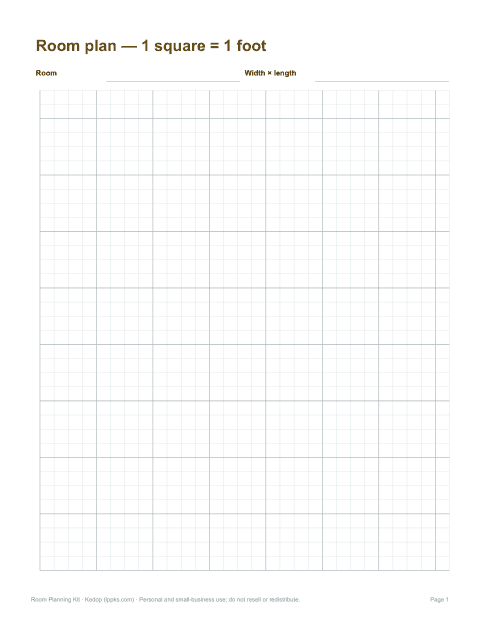
- Graph paper portrait (PDF, 100% actual size)
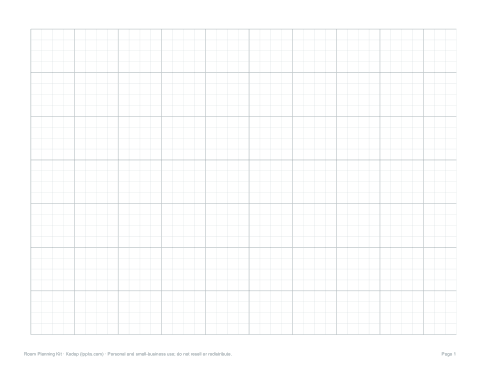
- Graph paper landscape (PDF, 100% actual size)
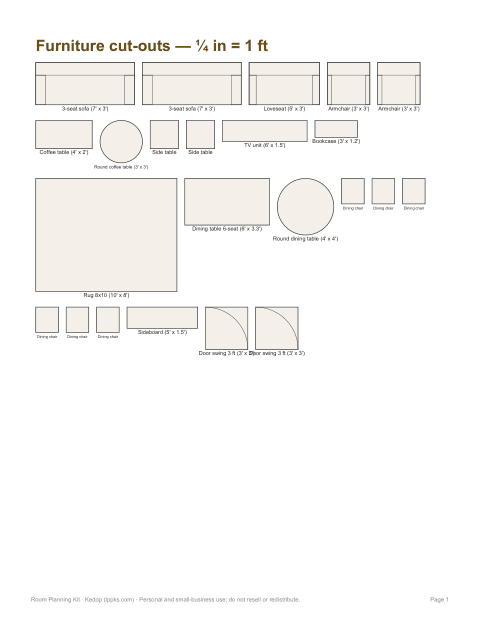
- Living & dining cut-outs (PDF, 100% actual size)
- + 4 more
$5.00 USD, one-time 10 resource files + README (11 files total)
- Instant download
- 7-day refund
- Secure checkout by Stripe
7-day money-back guarantee. Full refund within 7 days of purchase, even after you download.
Free sample: Room Graph Paper Portrait (PDF, 54 KB)
Room Planning Kit
All 7 printable PDFs are also free individually. The optional $5 kit adds editable room-measuring and furniture-moving Word worksheets and a static Excel clearance reference, with all 10 resource files and a README in one ZIP. Print scaled sheets at 100% actual size.
- Graph paper portrait (PDF, 100% actual size)
- Graph paper landscape (PDF, 100% actual size)
- Living & dining cut-outs (PDF, 100% actual size)
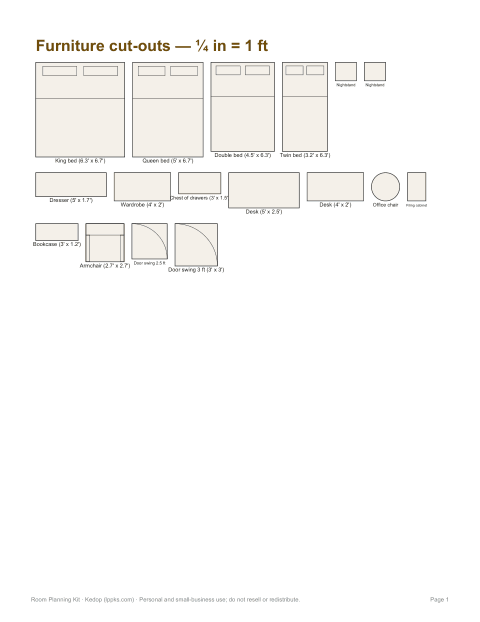
- Bedroom & office cut-outs (PDF, 100% actual size)
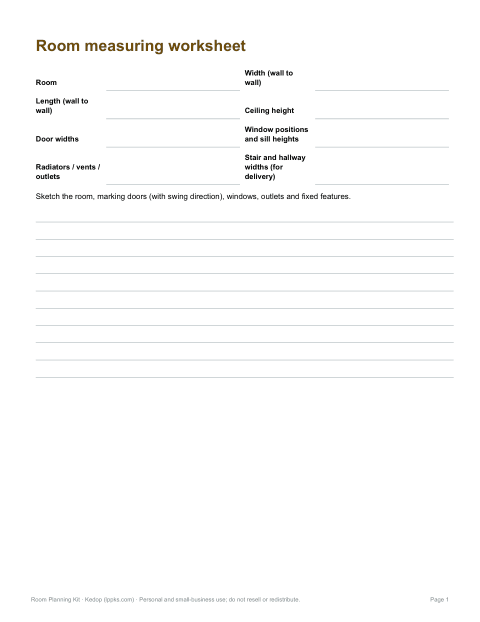
- Measuring worksheet (DOCX/PDF)
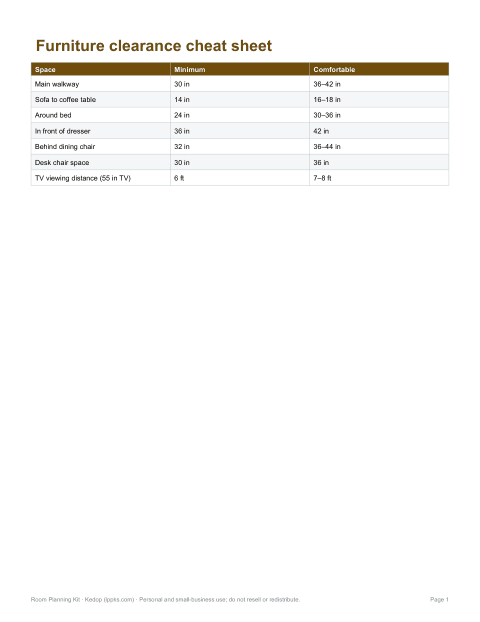
- Clearance reference (PDF/XLSX, static values)
- Furniture moving checklist (PDF/DOCX)
Formats: PDF, DOCX, XLSX. Instant download after payment (link valid 72 hours, up to 5 downloads). AI-assisted: the templates were drafted with AI help and reviewed and laid out before publishing.
$5.00 USD, one-time 10 resource files + README (11 files total)
- Instant download
- 7-day refund
- Secure checkout by Stripe
7-day money-back guarantee. Full refund within 7 days of purchase, even after you download.
Free sample: Room Graph Paper Portrait (PDF, 54 KB)
Full refund within 7 days — see the refund policy and license.
Free printables
All 7 PDFs below are free individually. The $5 pack adds 2 editable Word worksheets and an Excel clearance reference in one ZIP, with no additional PDF pages.
 Printable Room Planner Graph Paper1 page · free PDF
 Printable Graph Paper Landscape1 page · free PDF
 Printable Living and Dining Cut-Outs1 page · free PDF
 Printable Bedroom and Office Furniture Cut-Outs1 page · free PDF
 Printable Room Measuring Worksheet1 page · free PDF
 Printable Furniture Clearance Chart1 page · free PDF
 Printable Furniture Moving Checklist1 page · free PDF
3D room planner
How the 3D room planner works
The planner treats your room as a box and each piece of furniture as a smaller box with a position, footprint and height. It draws them in an isometric 3D view — looking down into the room from the front corner, with the two back walls shown — and in a scaled top-down floor plan with a one-foot grid. Because everything is to scale, you can see at a glance whether the sofa dominates the room, how the heights of a wardrobe and other furniture compare, and whether there is space to walk around the bed.
How to enter your room and furniture
- Measure the room’s width and length wall to wall, and the ceiling height.
- Pick the top-left corner of the plan as your starting point (0, 0). The x value runs across the width; y runs down the length.
- For each piece, enter its name, the x and y position of its top-left corner, its width, depth and height in feet, and optionally a colour.
- Low items such as rugs (height under 0.2 ft) are drawn flat on the floor.
- Adjust positions and watch both views and the checks update.
- Print both views or download the 3D view as an SVG image.
Your layout is saved in this browser, so you can come back and try alternatives. Use decimals for inches: 6 in = 0.5 ft, 3 in = 0.25 ft.
Clearance guidelines
| Space | Typical minimum |
|---|---|
| Main walkway through a room | 36 in (3 ft) |
| Between sofa and coffee table | 14–18 in |
| Around a bed (sides and foot) | 24–30 in |
| In front of a dresser or wardrobe | 36 in to open drawers and doors |
| Behind a dining chair | 36 in to pull out and pass |
| In front of a desk | 30–36 in for the chair |
The planner flags pieces closer than 18 inches so you can decide whether that gap is intentional (a sofa and coffee table) or a squeeze (a wardrobe door against a bed).
Layout tips
- Start with the largest piece — bed, sofa or dining table — and arrange the rest around it.
- Keep doorways and the route between them clear.
- Float furniture away from walls in larger rooms to create conversation areas.
- Balance tall pieces on opposite sides of the room.
- Leave space in front of windows and radiators.
- Use a rug to anchor a seating group; the front legs of sofas and chairs can sit on it.
Worked example
The living room example is 14 × 16 ft with an 8 ft ceiling. The sofa (7 × 3 ft) sits against the back wall with a 4 × 2 ft coffee table 18 inches in front of it, both on an 8 × 7 ft rug. An armchair, bookcase, floor lamp and TV unit complete the room. The planner reports a 224 sq ft floor with about 52 sq ft of furniture footprint (23%), no overlaps and no gaps under 18 inches — a comfortable, open layout.
The printable room planning kit
The kit bundles the same 7 PDFs available free, plus 2 editable Word worksheets and an Excel clearance reference. Print graph paper and cut-outs at 100% / Actual size, with four small grid squares measuring 1 inch. Do not shrink to fit A4; use US Letter or check clipping at actual size. Plan on paper with the family, then copy the final layout into the online planner to see it in 3D.
What this planner does not do
It is a quick planning tool, not an architectural program: it does not model doors, windows, sloped ceilings or L-shaped rooms, and furniture is shown as simple boxes. For irregular rooms, plan the main rectangle here and note alcoves on the printable graph paper. Always check real measurements — including door widths and stair turns — before buying large furniture.
Privacy
Everything runs in your browser. Your room and furniture list is stored only in this browser’s local storage.
Frequently asked questions
Can I plan a room in 3D for free?
Yes, enter your room and furniture sizes and the planner draws a 3D isometric view and a floor plan.
What units does the planner use?
Feet; use decimals for inches (6 in = 0.5 ft).
How much space should I leave for walkways?
About 36 inches for main routes.
Can I save my layout?
It is saved in your browser; you can also print it or download the 3D view.
Does it support L-shaped rooms?
Not directly; plan the main rectangle and use the graph paper for alcoves.
What is in the paid kit?
The same 7 PDFs available free, plus 2 editable Word worksheets and an Excel clearance reference: 10 resource files and README (11 files total).